
Insights, Advice, Brokerage, Corsiva, Haines, Interboat, Thames
What to look for when buying a used boat: A UK buyer’s guide
It is hard to beat that initial excitement of going to view a boat for sale. You have done your research, settled on a budget, imagined those long summer days out on the river, and now there’s a beautiful vessel sitting right in front of you. At that precise moment, during the process of buying a used boat, it can be very easy to let your heart rule your head, but it is important to slow down, seek advice, and take the time to thoroughly inspect the boat to ensure it is as good as it first appears.
As an independent marina based in Wargrave, just one lock from Henley-on-Thames, we have helped countless people find the right boat over the years, and we know exactly where any costly surprises will tend to hide. If you have already weighed up the benefits of buying a new vs used boat, and you are ready to start viewing different models, this blog will certainly help. We will walk you through what to look for when buying a used boat, from the hull and engine to the all-important paperwork, so you can buy with real confidence.
As you’d expect, there are many questions to ask when buying a boat. In fact, we’ve explored the ‘27 essential questions’ you should consider in a previous blog. Those cover what to ask, both of yourself and of the seller or broker. Below, we focus on what to physically look for when you are viewing the boat. We would recommend reading the two together: the questions first, then this article as you start viewing different models. Here is our boat inspection checklist:
Buying a used boat: Be prepared
We understand that buying a boat, whether new or used, is a significant decision that requires a substantial investment. If you are opting for the latter, read up on common problems with used boats. The best viewings are the ones when you turn up prepared, so you can spend that time asking the right questions and looking in the right places.
Get to know the model in question. Research the make and the particular boat you are going to see, so you have a clearer idea of general performance, well known quirks, or any particular weak spots. Also, have a quick scan online to see what similar types of boats are selling for elsewhere. This will provide you with a realistic sense of a fair price.
The most important thing is to take your time and don’t be afraid to take someone with you (especially if they have experience with boats). Two pairs of eyes are always better than one, and different mindsets often have different questions. Finally, don’t allow yourself to be rushed. A reputable seller will be more than happy for you to inspect the boat thoroughly and ask plenty of questions.
Boat hull inspection: Below the waterline
Whilst not always possible, we recommend viewing a boat out of the water. This is where the most expensive surprises can be located. A boat that is already ashore, or due to be lifted out of the water, can be checked more thoroughly than a boat for sale that is currently sitting on her mooring.
A good place to start is the hull. Check the hull for any cracks, deep gouges, or signs of previous repairs. Historic repairs are to be expected when buying a used boat, but you want to get a good idea of the standard of work delivered. If there are a few repairs, and to a good standard, you’ll know the current owner has taken pride in the upkeep of their vessel.
For older boats, look closely for small blisters in the gel coat, which could be a sign of osmosis. This is caused by water working its way into the laminate over prolonged periods of time. It is perfectly normal to see the odd blister, but more widespread blistering could lead to costly repairs in the future.
Make sure you pay attention to the condition of the keel, the propeller and the rudder. Check the keel for any damage (where it might have touched the bottom of the river), and the propeller for any dents or chips. If the boat you are viewing has a sterndrive, give it a push and watch closely for any movement. A little movement is normal; however, any noticeable movement could point to a softened or rotten core.
Above the waterline
Once you have looked over the hull, you can now turn your attention to everything above it. Thankfully, this part of the boat inspection can be done regardless of whether the boat is in the water or not. It’s also a good place to start if viewing out of the water is not possible that particular day.
Make a start by inspecting the topsides and the general standard of finish. Once again, keep your eyes peeled for any small cracks. This can be common on an older boat, and normally, it is more of a cosmetic issue than anything to worry about. Look closely for any cracks originating from fittings and corners, as this could point to stress or movement rather than simple wear and tear.
Similar to inspecting a car, look for any signs of resprays or patches where the colour does not quite match. This would indicate a past repair. Once again, they are perfectly normal, but it is worth asking the question and getting a clearer picture of the standard of any work carried out.
Inspecting the deck
Once you are aboard the boat, check the cleats, rails, any fixtures, and that the deck is solid underfoot. Check the hatches, windows and canopies (if the boat has them) to ensure they are in good condition. The overall finish of a boat is a solid indicator of whether it has been looked after by the previous owner. A tidy and cared-for vessel is always a good sign when buying a used boat. If you are unsure about some of the names of specific boat parts, read our beginner’s guide to boat terminology.
Inside the cabin
If the boat you are viewing has a cabin, it is now time to head inside. Trust your nose first. A damp, musty smell is one of the clearest signs that water has been getting in somewhere. Therefore, if something doesn’t smell quite right, try to find out why. Look for staining around windows, hatches and fittings, and press the flooring underfoot as you move about. Soft or springy patches can suggest water has worked its way into the structure. This is the exact sort of thing you want to know about before you buy, not after.
From there, work through the cabin. Check the upholstery, open and close any cupboards or storage units, and take a look at the plumbing, gas system and bilge. Don’t be afraid to ask when things were last serviced or replaced. As ever, a clean, dry and well-kept interior is a reassuring sign that the boat is in good condition.
Inspecting the engine when buying a used boat
For many buyers, the engine is the part they feel least confident inspecting. However, there are a few simple checks you can carry out to give you a clearer idea of its condition.
Generally, you can only test and/or run the engine if the boat is in the water. If so, ask the seller not to run the engine before you arrive. Ideally, you will want to see how the engine performs from a cold start.
Once ready, watch and listen carefully as it starts. It should fire up without excessive cranking before settling into a smooth and steady idle. Be sure to keep a close eye on the exhaust. A brief puff of smoke is to be expected upon start-up, but if the exhaust continues to smoke, it is worth questioning. During this process, inspect the general condition of the engine and check for any leaks.
Ask the seller or the broker about the engine hours and, just as importantly, the service history. Of course, hours alone only tell part of the story, as a well-maintained engine with high hours can be far better than a neglected engine that has been rarely used.
Boat inspection: Checking the electrics
When considering what to look for when buying a used boat, it is always worth checking the boat’s electrical system too. Turn on the navigation lights, test any pumps, and check that onboard electronics such as the radio and any screens power up as they should. Take a look at the battery and wiring where possible. As with the engine, you don’t need to be an expert; you are simply looking for anything that doesn’t seem quite right.
Paperwork when buying a used boat
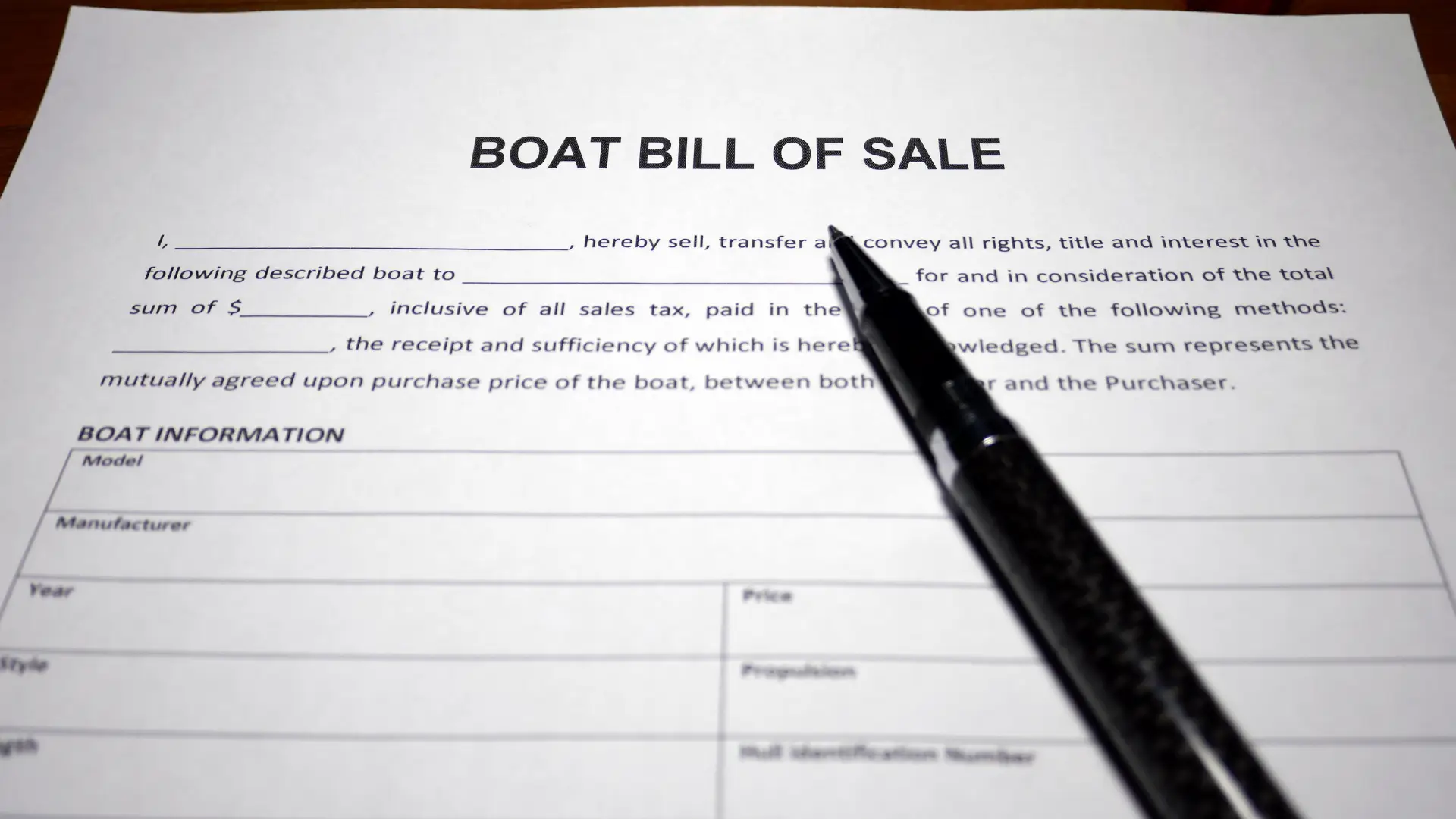
You have viewed the boat, and it looks in fantastic condition, but there could still be problems that you cannot see. This is why examining the paperwork is just as important as the vessel itself. You will want to be confident the seller has the right to sell the boat and that there is no outstanding finance secured against it.
Check that the Hull Identification Number (HIN) on the boat matches the one on the documents. You may also see it called the Watercraft Identification Number (WIN) or Craft Identification Number (CIN).
Ask for copies of previous bills of sale and also proof of VAT-paid status, as a boat without these can be harder to sell on. A full set of service records and receipts will also show that the boat has been looked after.
If you plan to keep your boat on the Thames or the majority of other inland waterways, you’ll also want to see a valid Boat Safety Scheme (BSS) certificate, which is required before you can obtain a licence.
Buying a used boat? Take a sea or river trial
Wherever possible, try to see the boat in action. This is the only real way to tell how she handles and whether the engine runs cleanly. Pay particular attention to how the boat starts and holds a steady speed, while also listening out for any unusual vibrations or noise.
Buying a used boat through a broker
If you have made it this far, you will know there is a great deal to look out for when buying a used boat. However, this is where a reputable broker can take the weight off your shoulders. A good broker will always check that the seller has the right to sell, confirm there is no outstanding finance, verify the boat’s VAT status and paperwork, and hold your money safely in a dedicated client account until everything is in order. They will also help to arrange the trial run. This makes the whole process more straightforward, and less risky, than going it alone with a private sale. As an established marina with our own brokerage, this is exactly what we do for our customers every day.
At the same time, it is also strongly recommended that you secure your own independent pre-purchase boat survey. While carrying out the checks we have listed above is a solid start, it is important for an impartial expert to closely examine the boat in question. This will provide you with a “point in time” snapshot of the true condition of the boat, and peace of mind when making such a significant investment.
At Val Wyatt, we have a wide range of new boats for sale in the UK (both new in stock and new to order), as well as a number of used boats for sale, which are in exceptional condition and ready to be enjoyed. You can browse the full listings here. Contact us on 0118 940 3211 (Wargrave) or 01243 217485 (Chichester) or fill in our online form and we will get back to you as soon as possible.


